- You run a Shopify webshop and want to understand what TikTok Shop affiliate marketing is
- You are considering working with creators on a commission basis
- You want to prepare your brand before TikTok Shop arrives in Denmark
- You want to know how to set up an affiliate model that makes financial sense
TikTok Shop is not an extension of TikTok Ads. It is a separate commerce channel where users discover and buy products directly within the app. One of the channel's core elements is the creator affiliate network: creators promote products and earn a commission on sales, while the brand primarily pays for results.
This differs from paid distribution like Spark Ads and Partnership Ads. With those, you pay to show creator content to more people. With affiliate marketing, you pay for the sales the creator generates. The two models can complement each other, and we will get to that later in the article. You can find the complete introduction to TikTok Shop in our article TikTok Shop is Coming to Denmark.
Status: Where does TikTok Shop stand in Denmark right now?
Last updated: October 4, 2026
TikTok Shop has not launched in Denmark, and no official launch date has been announced. The platform is live in several other European markets. We are not speculating on a date. Keep an eye on TikTok's own announcements.
Most of the preparation work is relevant regardless of when the launch happens. That is why it makes sense to start now.
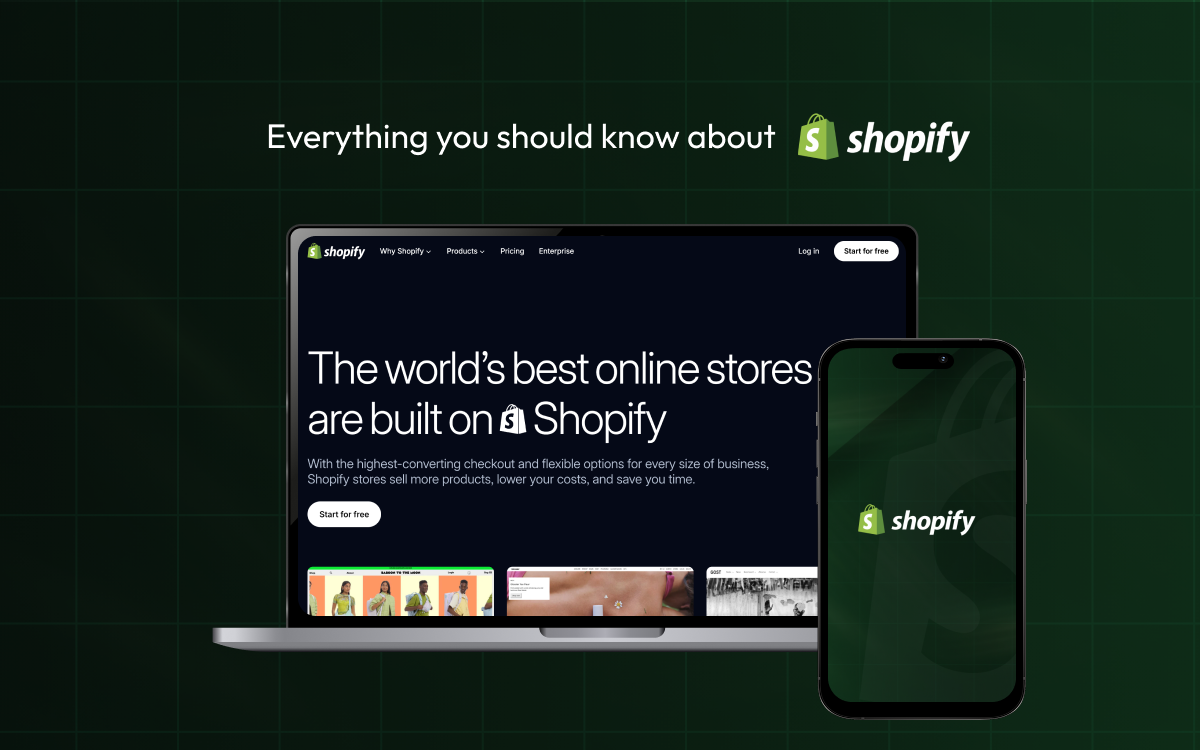
The affiliate model is not new to us. In our current setup, we run creator affiliate on Shopify using the Uppromote app. It is not TikTok Shop, but the basic mechanics are the same: creators get a unique link and earn a commission on the sales they generate.
Automated affiliate links
Each creator gets their own link. This allows us to see exactly who is generating sales.
An attractive commission
The commission is a percentage of the sale, and you decide the rate yourself. We recommend a minimum of 15%, with 20% as a starting point. Lower rates are rarely attractive to creators. The rate can be adjusted later.
A sign-up form that filters applicants
We require a name, email, and both Instagram and TikTok profiles. The form must include a visible note stating that the profile must be public. Private profiles cannot be evaluated, and this is one of the most common mistakes.
Manual review before approval
We open each applicant's Instagram and TikTok profile to approve or reject them. The program is open for sign-ups, but not for everyone.
Tracking and payouts
The standard tracking window is 30 days: a purchase on day 28 after a click counts, while a purchase on day 31 does not. Payouts are made via PayPal or bank transfer. Creators log in to view their own sales, commission, and payment info. The login email often ends up in spam, so remind them to check it.
One detail that causes confusion the first time: If a creator orders their own free product, the order may appear under the creator's link with 0 DKK in commission. This is normal.
The biggest mistake is choosing based on follower count.
Find your ideal customer match
Ask whether the creator's audience aligns with your brand's core customer. A smaller creator with a precise match often outperforms a large creator with an imprecise reach.
Look for genuine engagement
Real comments and interactions show that the audience is listening. Reach alone says nothing about trust.
Choose those where the product feels natural
Content that fits into the creator's own universe maintains authenticity. If the brand doesn't fit the profile, the collaboration ends up as an advertisement instead of a recommendation.
A commission is not a free gain. It is the price of a sale. Therefore, calculate your break-even point and unit economics before setting a rate. A commission on an order that is already unprofitable only compounds the problem.
If you can see who is driving sales, you can compare the commission against sales per creator and adjust accordingly. At the same time, evaluate affiliate marketing in the context of your overall efficiency. MER vs. ROAS explains why isolated channel metrics hide the big picture.
From creator content to paid scaling
Once a piece of creator content has proven itself, it can be scaled as a paid ad through the creator's own profile. The format preserves the content's social proof, and the creator remains the sender.
- Spark Ads on TikTok: Requires an authorization code generated by the content owner. The code is specific to the individual video and typically remains valid for up to 365 days. See Spark Ads: How to Validate TikTok Ads for Free.
- Partnership Ads on Meta: Requires the creator to accept an approval request and for the video to be available in both 9:16 and 4:5 formats. See Meta Partnership Ads and TikTok Spark Ads.
It works on TikTok today and does not require TikTok Shop to be enabled.
1. Build a consistent content rhythm
Build a library of product-focused formats: unboxings, demonstrations, before/afters, and use cases. TikTok rewards consistency over one-off videos.
2. Identify relevant creators and start building relationships
Find them in your niche and start the conversation before your competitors do.
3. Clean up your product catalog
Check titles, descriptions, stock status, and ensure every product has high-quality images. Video content on product pages is an advantage.
4. Understand that TikTok Shop and TikTok Ads are two different channels
They can reinforce each other, but they require separate strategies and separate KPIs.
DVISIONMEDIA's approach
We don't treat TikTok Shop as a shortcut, but as part of a cohesive system. Today, we run creator affiliate on Shopify with a proven setup: automated links, an attractive commission, and manual review of every creator. We scale the content that works using Spark Ads and Partnership Ads. As a TikTok Platinum Partner with an official TikTok case study, we work continuously with the platform.
When TikTok Shop opens in Denmark, the foundation must be in place: content, creator relationships, and a commission model that makes financial sense. That is the approach we build into our influencer work through E-COM OS.
1. Has TikTok Shop launched in Denmark?
No. No official launch date has been announced. The platform is live in several other European markets.
2. What is the difference between TikTok Shop affiliate and Spark Ads?
With affiliate, the brand pays a commission on the sales a creator generates. Spark Ads is paid distribution of an existing organic post, where the post's comments, likes, and shares are preserved.
3. Can I work with creators on commission already?
Yes, on your own Shopify webshop. It is not TikTok Shop, but the same basic mechanism: unique affiliate links and commission on sales.
4. How high a commission should I offer?
We don't have a documented rate for TikTok Shop. In our current Shopify setup, we recommend a minimum of 15% and a starting point of 20%. Always calculate your break-even point first.
5. How do I choose the right creators?
Choose based on how well they match your ideal customer, genuine engagement, and whether the product feels natural in the creator's world. Don't base it on follower count alone.

.png)










.png)